
Fixture-form field guide
Flush mount, semi-flush, or pendant?
Name the form by the space between ceiling and fixture. A flush mount meets the ceiling; a semi-flush light hangs from a short rigid connector; a pendant uses a longer rod, chain, or cord. Catalog language varies, so record the construction and dimensions before relying on a seller’s label.
The practical distinction
Compare the same three features
| Form | Direct answer | What to inspect |
|---|---|---|
| Flush mount | The fixture body meets the ceiling, with no distinct stem, chain, or rod between them. | Look for a canopy, plate, or housing fastened directly at the ceiling plane. Measure total depth from ceiling to the fixture’s lowest point. |
| Semi-flush mount | A short, rigid neck or stem creates a visible gap between the ceiling canopy and the main shade or body. | Record both the gap and total drop. A very shallow fixture can still be semi-flush when a distinct connector separates its body from the ceiling. |
| Pendant | A rod, chain, cord, or other suspension carries the light appreciably below its canopy. | Measure ceiling-to-bottom drop and identify whether the suspension is rigid or flexible. Photograph canopy, connectors, and any adjustable links. |
A terminology caution
“Pan fixture” describes a body, not a mounting rule
In this guide, pan describes a shallow metal ceiling body that carries sockets, arms, or shades. That body may sit at the ceiling or hang below a short stem. Use “pan” to describe what the fixture is built around, then separately record whether its present mounting is flush, semi-flush, or suspended. A canopy or stem may also have changed during rewiring.
Dated comparisons
The catalogs show a continuum, not three boxes
These plates document fixtures offered eight years apart. They show shallow bodies, short rigid drops, rods, and chains sold alongside one another. Open each cited scan page to compare its photographs, model numbers, and printed dimensions.
1926
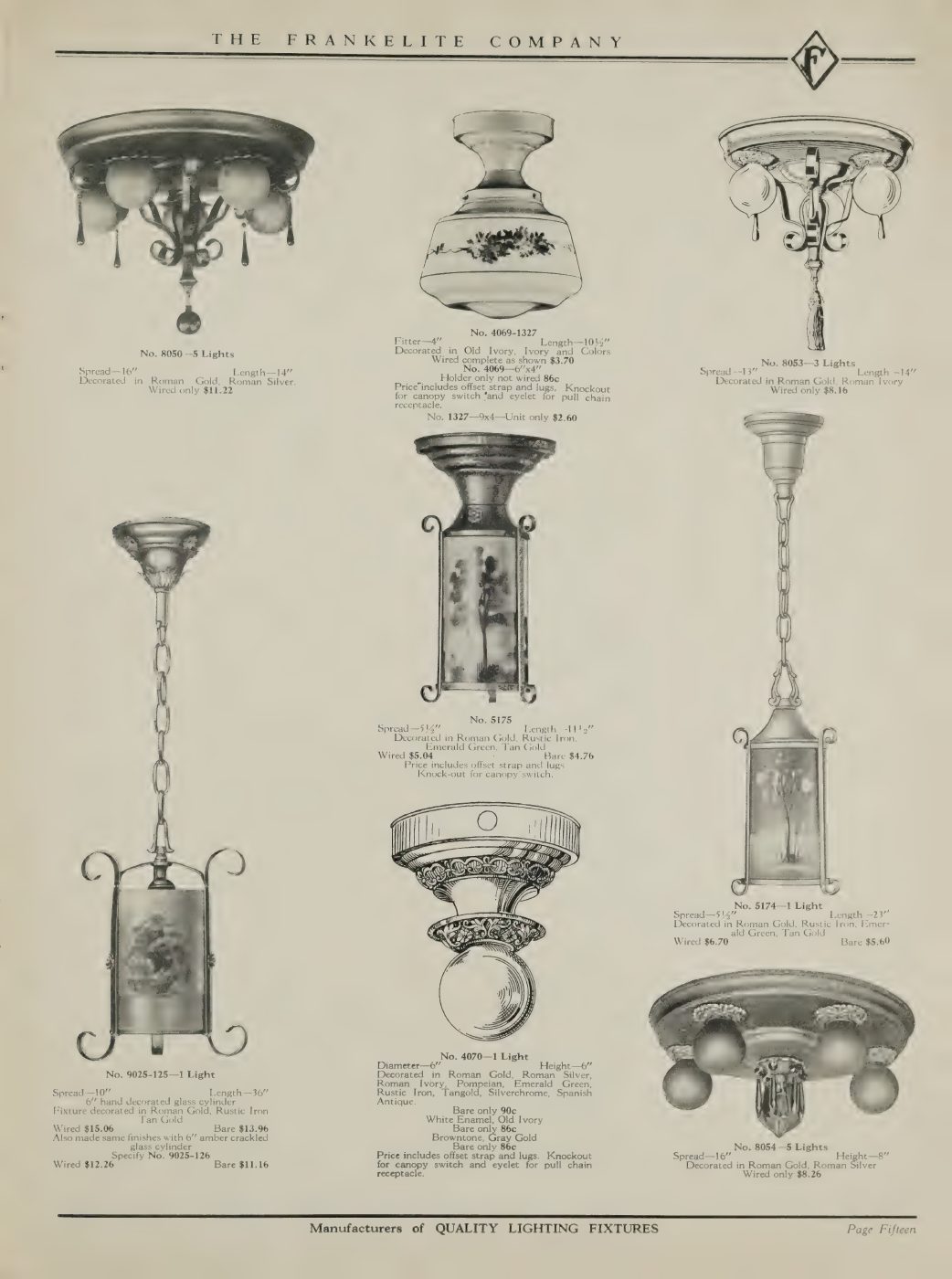
Frankelite close-ceiling group
One plate places shallow multi-light ceiling bodies beside short-stem glass and chain-hung lanterns. The maker’s dimensions separate spread or diameter from length and height.
Open the cited scan page →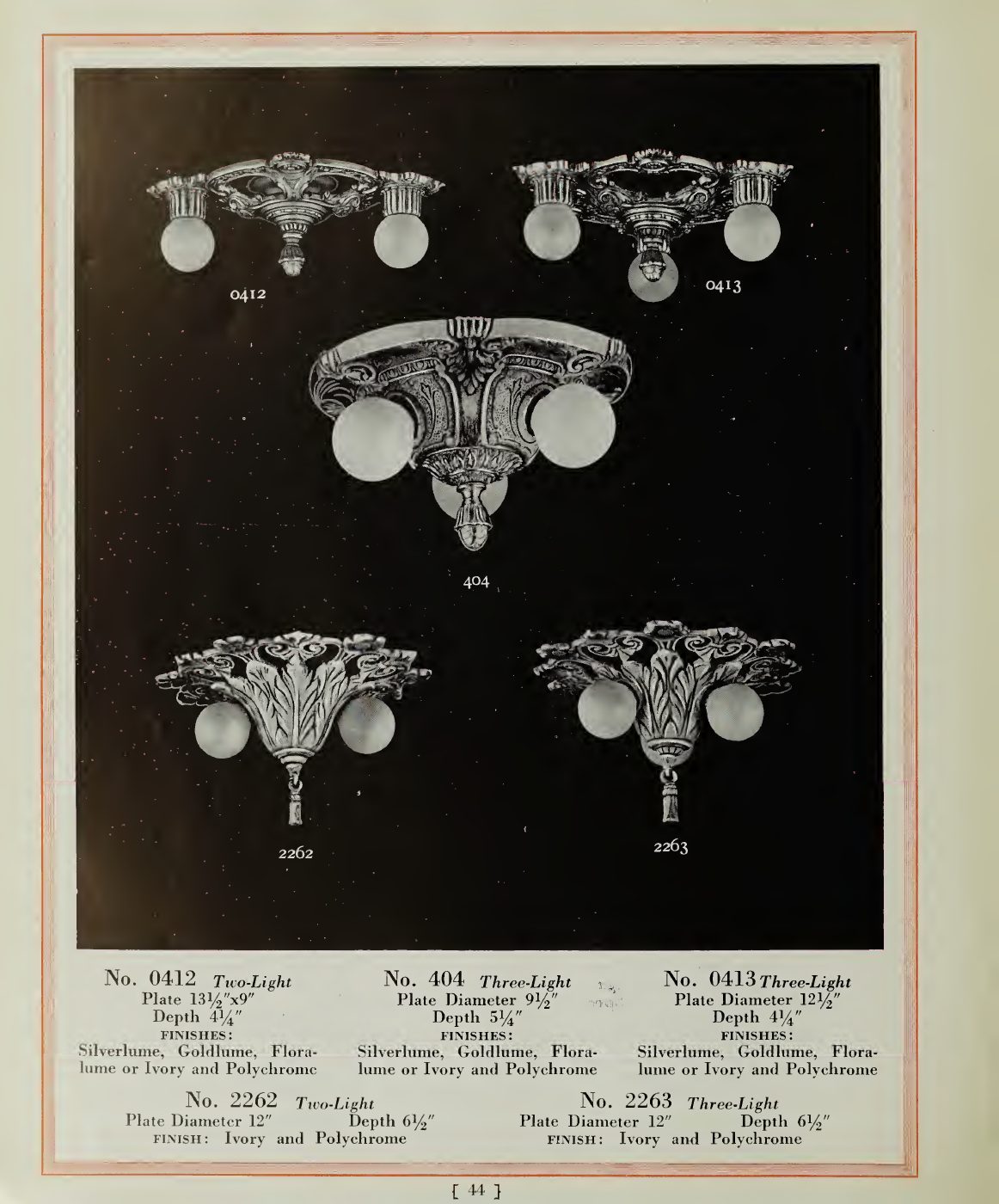
1930
Champion low ceiling plates
The plate gives diameter and depth for compact ceiling bodies. Those two measurements are more precise evidence than a present-day marketplace category.
Open the cited scan page →1934
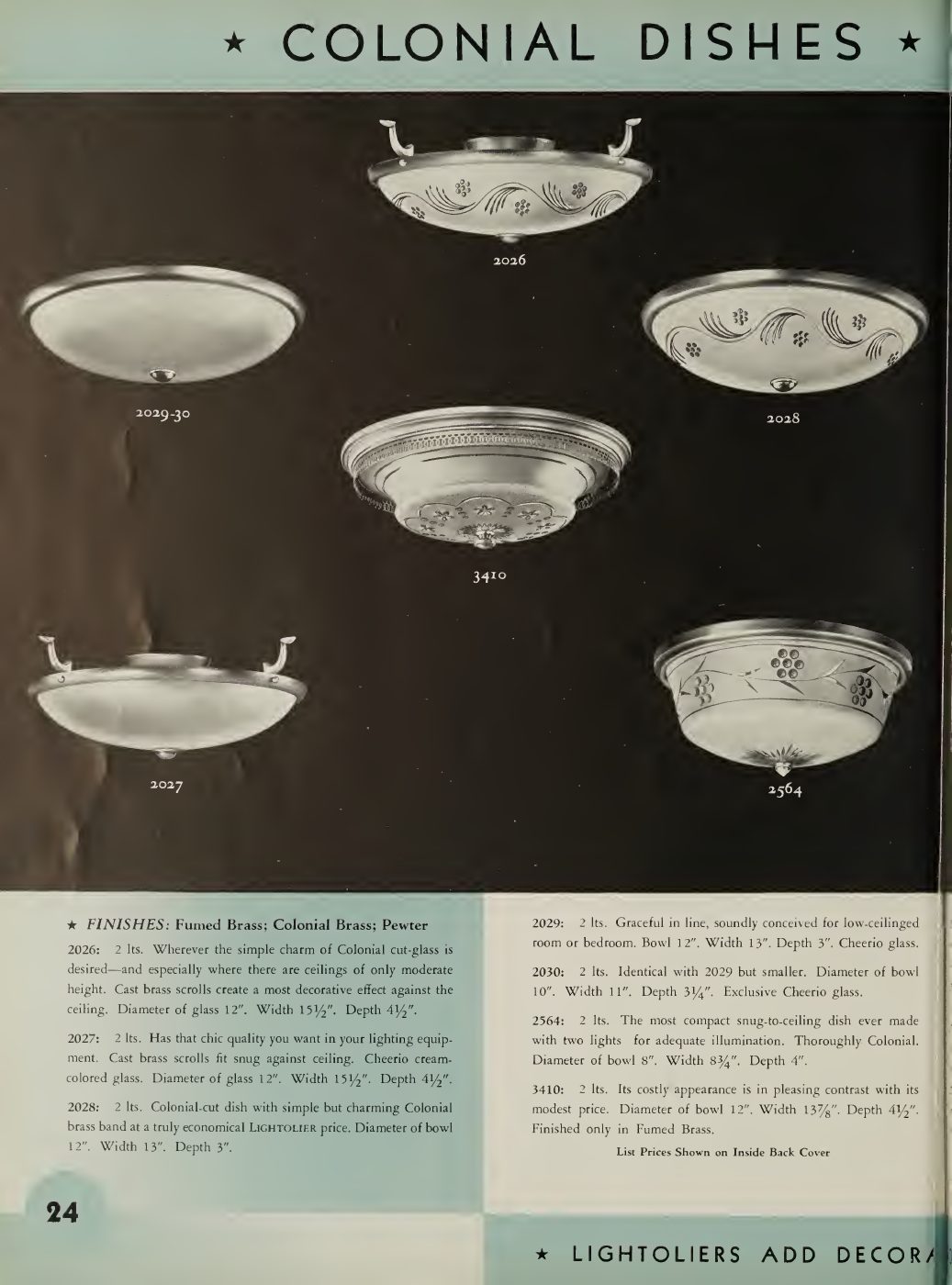
Lightolier Colonial dishes
Lightolier describes cast-brass scrolls as “snug against ceiling” and calls another model a “snug-to-ceiling dish.” The page records bowl diameter, overall width, and depth separately.
Open the cited scan page →Current reproductions by form
Keep the ceiling connection consistent with the room
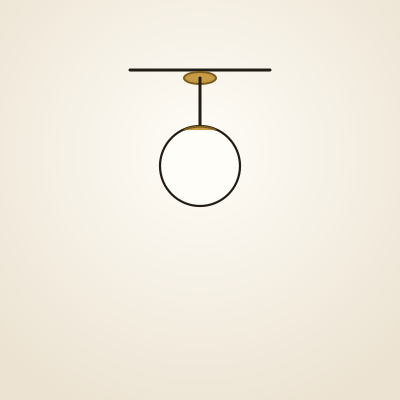
These modern fixtures make the three mounting distinctions visible in current products: a body at the ceiling, a globe below a short rigid neck, and a shade on a longer flexible suspension. Choose by measured drop and canopy clearance first; the period-inspired finish and shade come second. Each detail page explains the visual fit and what to verify before ordering.
As an Amazon Associate, Old House Lights earns from qualifying purchases. Prices and availability are shown on Amazon and may change.
 Amazon pick
Flush mount
Brass Star Glass Ceiling Light
A compact brass-and-glass star fixture with the faceted geometry and sparkle of a Deco-revival ceiling light.
 Amazon pick
Semi-flush mount
Opal Schoolhouse Semi-Flush Ceiling Light
A twelve-inch opal milk-glass schoolhouse globe on a compact gold-finish ceiling mount.
Amazon pickPendant
Gold Schoolhouse Milk-Glass Pendant
A compact gold-finish pendant with an opal milk-glass schoolhouse shade for a kitchen, bath, or hall.
What to measure and photograph
Photograph the complete fixture square to the ceiling, then make close views of the canopy, stem or chain, socket cluster, shade supports, and altered holes. Measure the overall drop from ceiling to lowest point, maximum width, ceiling-to-body gap, canopy diameter, and shade or fitter dimensions. The site’s fixture measuring guide shows consistent reference points.
Do not date a light from mounting form alone. A short drop may reflect ceiling height, a maker’s product option, or later alteration. Compare construction and measurements with a dated plate, list visible mismatches, and use “consistent with” when the evidence does not support an exact model attribution.
Research sources
- Frankelite Company, Lighting Equipment of Charm (1926)—close-ceiling, short-stem, and chain-hung forms with printed dimensions.
- Champion Lighting Fixture Co., The Fourteenth Salesbook (1930)—compact ceiling plates identified by diameter and depth.
- Lightolier Company, Style Book 1934–1935 (1934)—“snug-to-ceiling” dishes and one glassware family offered with several suspension lengths.
All three are Avery Architectural and Fine Arts Library copies digitized by Internet Archive for the Building Technology Heritage Library. Each catalog page links to the complete institutional scan and states the date basis and reuse information.